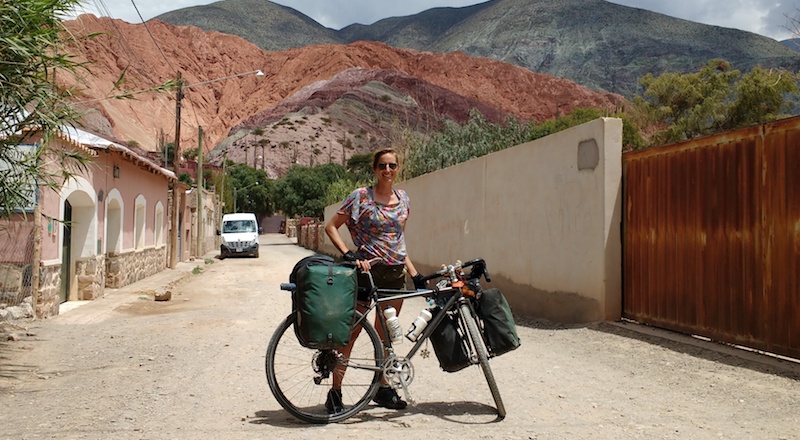
People often ask me which bicycle I ride and if I like it or not. The simple answers are: Pelago Stavanger and “Yes!”. But, after cycling for 16 months, I think it’s high time to write a review of the bicycle which I now consider my second skin. I’m still not a bicycle specialist, but this is what I see when I see my Pelago.
Disclaimer from 2026: although I was sponsored by Pelago at the time of writing, I was not asked to write this. Instead, it is written purely out of my own joy for riding this great bicycle.
My faithful travel companion
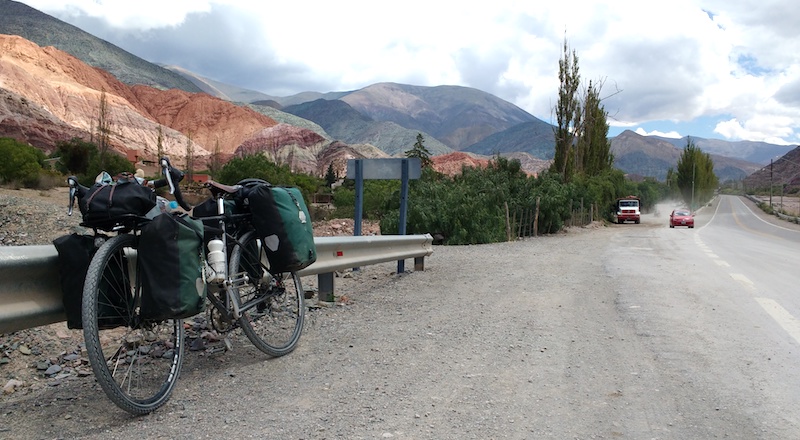
Pelago Stavanger is a touring and adventure bicycle, also apt for urban surroundings. It’s a bike that Antti Aittola also used on his tour around the world, and it’s the bike I’ve been riding for 16 months now. With a riding position lower than on e.g. Dutch-style urban bicycles, yet still more upright than on most mountain bikes, it’s perfect for the mixture of terrains and surroundings that a trip like mine includes.
From dirt roads to cities
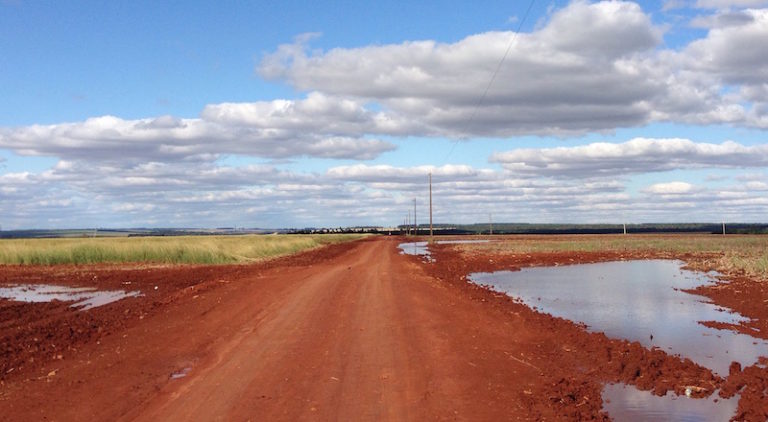
I don’t ride very much on dirt roads or rough terrains. In fact, I love sticking to highways and other busy roads with cars and people passing by. If I can choose between small villages or being immersed totally by nature, I’ll go for the small villages. Why? Because I love meeting people and that’s something I can’t easily do alone in the middle of the jungle. Moreover, I love cycling in big cities, and this bicycle is surely one of the best touring bicycles out there for doing so. Not only does it ride extremely well on cramped city streets, but due to its sleek design, it blends in perfectly, so unless you want to, you don’t have to look like a bike tourer all the time.
Pelago Stavanger performs extremely well on all terrains I’ve been on, and this view is shared also by Antti Aittola, who has cycled in way harsher surroundings than myself. The only time I’ve had some difficulties was in a national park in Argentina. The bike kept sliding from side to side and stable steering was incredibly difficult. However, as soon as I changed from my somewhat thin tires to the sturdier Schwalbe Marathon+ tires, the problem was gone. I also removed the original aluminum fenders quite early on, in order to not have to worry about the bicycle looking too shiny, mud getting stuck under the fenders and the thicker tires not fitting in.
Why Pelago Stavanger?
Very honestly, until now this bicycle itself hasn’t failed me even once. However, every bicycle needs maintenance, and what I love about Pelago Stavanger is that it’s easy to fix and maintain. The disk brakes (which I was afraid I couldn’t fix anywhere) have turned out to be the most durable and effective solution, especially for the mountains. Moreover, the Shimano components are top-notch.
The only downside of Pelago Stavanger
People in Latin America notice very easily that it’s a superb and expensive bicycle. They comment on the disk brakes, the quality components and the sleek frame…and always ask about the bike’s price. So, if you want your bicycle to blend in with the ones sold in South America, Pelago Stavanger isn’t your best bet. (I remember Antti Aittola telling me this wasn’t the case in Russia. Apparently there, people love bicycles with zillions of accessories. Therefore, they thought Antti’s Pelago was super cheap, as it looked so rustic!). However, until now, the bicycle has mostly raised curiosity and no one has ever made any attempts to steal it.
Tech specs of Pelago Stavanger (as seen by me)
Brakes: Disk brakes
Saddle: Brooks (I had the original one changed into a women’s model)
Components: Shimano 105 5700
Weight: around 11 kgs
Additional gear on my bicycle
Commuter front rack
Commuter back rack
Bottle holds
Schwalbe Marathon+ tires (thicker than original)
Saddle Brooks Women
Removed from my bicycle
Aluminum fenders
…and for “a bit” more accuracy on all of the above, here the tech specs by Pelago.

Having decided on a bike, here’s what to pack on a long-distance cycling tour!