
You know those brief moments in a different culture where you go: “say whaaaat?!”. The small little details which just make you wonder… Take sweet avocado for example. Brazilians and Paraguayans (and many other Latin Americans) mash avocado up and mix it with milk, lime and sugar. So imagine the looks on my hosts’ faces, when I cut my avocado into cubes and put it into a salad with salt. In the discipline of intercultural communication, this would be called a critical incident.
However, there are also other kinds of interesting details sealed within cultures. And the best part is, when staying with locals, you don’t just observe them but get explanations to them as well.
There are plenty of peculiarities I have observed in Paraguay (of which some apply also to the neighboring countries). You, know, things that have made me ask myself why?
And after unsuccessfully trying to figure them out on my own, I’ve asked Paraguayans about them. Here are some of those questions.
Questions & Answers
1. Why is the toilet paper never thrown into the toilet but into a separate bin?
“The plumbings are so small that they would get stuck otherwise.”
2. Why is a Paraguayan shower water never hot?
“It is. But with an electric shower, the lower the pressure, the warmer the water. If you take a shower with high pressure, you’ll only end up with freezing water.”
3. Why do Paraguayans clap their hands instead of knocking or using a doorbell?
“It’s louder. And remember, you always clap three times.”
4. Why do Asunceno bus drivers let homeless people in for free?
“They know they don’t have money. There is a huge debate about it in Asunción, though.”
5. Why is beer shared in Paraguay?
“Beer should be drank cold and that way it stays cold longer.”
“We like to share drinks, not only tereré (a cold herbal drink).”
6. Why do random Paraguayans add me as friends on Facebook?
“Here, Facebook is like your business card. Everyone has more than 2000 friends on Facebook. That’s normal.”
“Facebook is where everything happens.”
7. What does the Paraguayan nasal “heeeeeee” mean?
“It’s a Guaraní word for yes. But watch out, if it’s long, it means: ‘I have no idea what you’re talking about'”.
8. Why is it that in a social situation no one says they want to sleep even if everyone is dead tired?
“No one wants to be mala onda. Who wants to be the one to ruin the fun?”
9. Why do Paraguayan women go crazy for the ukulele player of Kita Pena (a local group I saw live in Rockero the other day)?
“He’s blond with bright eyes. He’s exotic.” (…who looks like a Finnish hipster.)
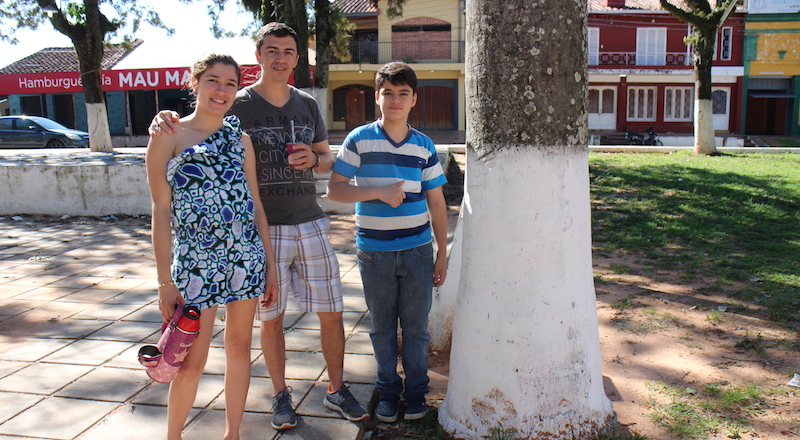
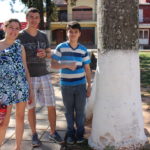
10. Why are the tree trunks in villages painted white?
“It makes the villages look cleaner and nicer.”
“It protects the tree trunks from insects and diseases.”
“I have no idea.”
For more stories from Paraguay, read e.g. 3 ANSWERS TO: “WHY CYCLE PARAGUAY?” or STAR WARS GO LATIN: “USE THE ONDA!” or CARMEN COLAZO: GENDER EQUALITY IN PARAGUAY? THERE’S NO SUCH THING!.
What is a critical incident?
A critical incident is a term used in intercultural communication to refer to a situation, where two (or more) counterparts end up in a situation which they consider confusing or sometimes amusing. They are incidents where the clash of two cultures is so notable that one requires explanations, because the behavior of the other just seems bizarre. Usually, critical incidents stay in your mind.
A perfect example would be a case told by my couchsurfing host Cesar just yesterday.
Critical incident between a German and a Paraguayan
“In Paraguay, we’re taught to be gentlemen in what some might called an old fashioned way. In fact, my grandmother always used to say that she was bringing me up so that one day I could even marry Princess Charlotte of Monaco. This means, I’ve been taught to open the doors for women, carry their bags, fix things for them etc. If I don’t do this, most people here will consider it rude. So, imagine the shock when I hosted a German girl who all or a sudden had an outburst of anger after my opening the doors for her for two consecutive days: ‘César, don’t treat me like an idiot! I can take care of myself!’. What a confusing moment.”
We talked about this afterwards and I told César that in Finland, just like in Germany, women are nowadays taught to be self sufficient. If a man does too much for a woman, it can be seen as though he were underestimating you.
Obviously, this view will clash very strongly with the one César represents in Paraguay, because both counterparts interpret the situation from their perspective. The way out of this is talking about the situation, explaining one’s values, habits and interpretations.
In other words, questions are the answer. So, good luck!
Strangerless TIP: How to ask intercultural questions?
- “Is it a custom here to…?” (Is it a custom here to give cheek kisses?)
- “What’s the meaning of…?” (What’s the meaning of ‘heeeee’?)
- “How should I…here?” (How should I speak to older people here?)
- “Why is….done like this?” (Why do you keep opening the doors for me?)
- “When can I…?” (When can I stop drinking mate?)
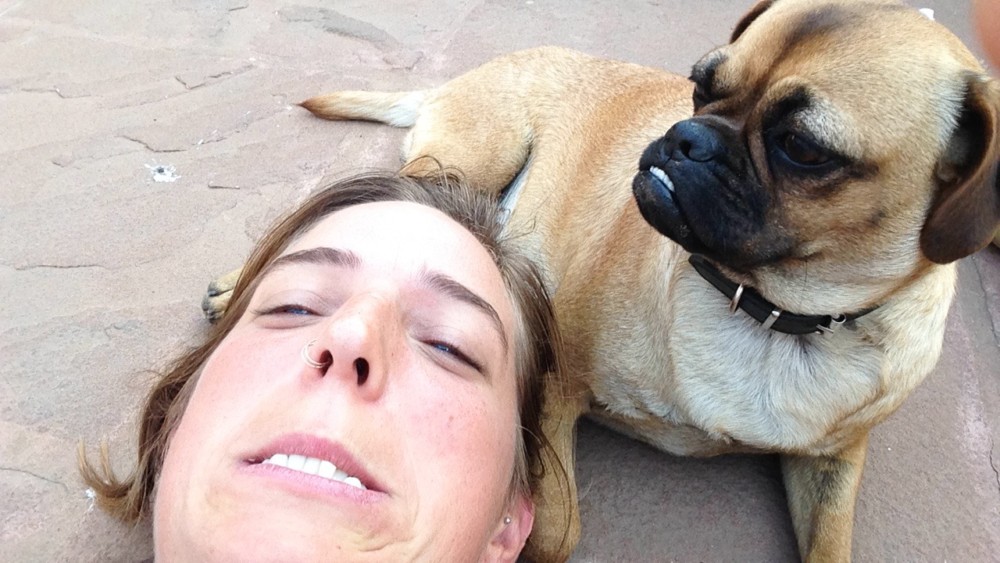
Greetings from Asunción! Me and my new friend Pepa practicing intercultural communication.


Olipa kiva kuulla sun ääni! Ymmärsin yllättävän paljon. Puhut kuin natiivi, aikamoista vauhtia. Voi hyvin 🚲 t. Karo
Karo!!! Natiivit eivät vielä ole ihan samaa mieltä natiiveudestani, mutta vähitellen kato! Onneksi teema, josta kyselivät, on jo melko tuttu :D! Paljon halauksia sulle sinne pohjolaan!!
You. Have shared your adventures and I have learned so much from your site. You are a brave woman to travel alone and so far away.. May your road trip continue to be safe and eventful.are you going to write a book?
Hi dear Lauryne!!! How happy I am to hear that you’re reading my posts and that you’re actually LEARNING something out of them! That’s the best news I could possibly have! Definitely motivates me to keep on writing. And thank you for the ‘brave’ 🙂 I don’t always feel like it myself, because the people here are so nice that it’s hard for me to feel scared. I feel very welcome on this continent. As for the book…I’d like to write a book one day, yes! Lots of hugs from Asunción, Sissi