When cycling in Latin America between 2015 and 2018, I realized that the bicycle is a revolutionary device. There, a woman riding a bicycle is not just commuting, but actively transforming her reality and environment. Since then, I’ve seen bicycles as much more than a means of transportation. Today, I see them as mobility, autonomy, possibility and access.
How bicycles enhance cultural discovery
A bicycle is not just a frame and two wheels. It is a social device that, to many, grants access to healthcare, education and work. To me, it also grants access to cultures. And not only to their visible layers. The bicycle opens doors to the private sphere of society — to people’s lives and homes.
Here’s what makes the bicycle an exceptional vehicle, for locals and travellers alike.
1. Bicycles signal hierarchical equality
In modern day societies, cars signal hierarchy. They encode wealth, status, and separation. Bicycles, on the other hand, compress class differences and often flatten visible hierarchy in public space. In cycling societies like the Netherlands, CEOs and students occupy the same bicycle lanes.
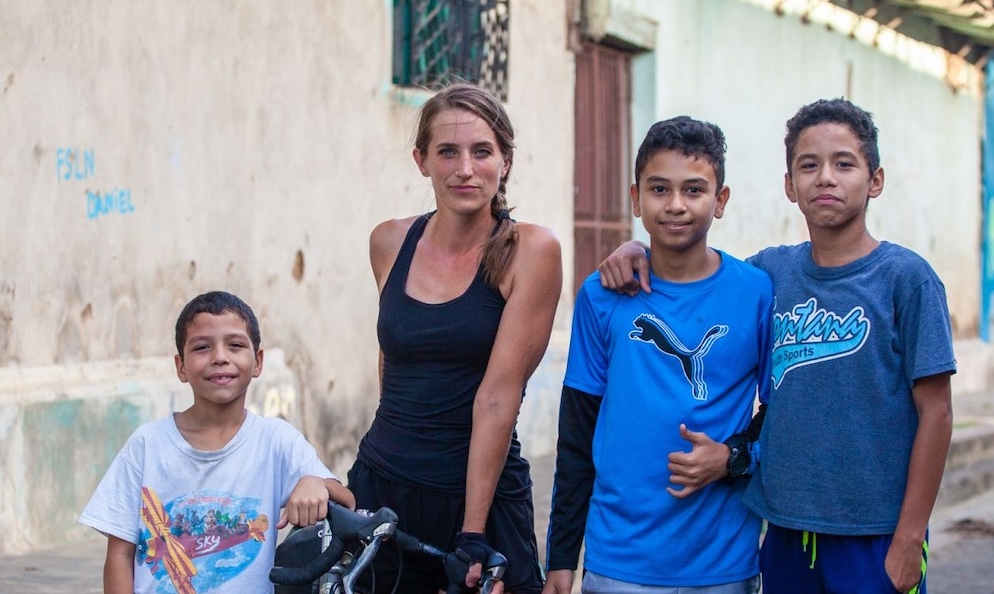
When traveling by bicycle, you’re exposed, fragile, and vulnerable — just like locals on their bicycles. Of course, in many countries the simple fact that you are traveling already signals privilege. Yet still, People can see you. They can approach you. They can talk to you. This makes you physically and mentally approachable.
2. Bicycles grant access to people and places
In rural regions across the world, a bicycle can mean the difference between attending school and staying home, or between reaching a clinic and going untreated. This is why various NGOs donate bicycles to rural communities, the most well-known being World Bicycle Relief.
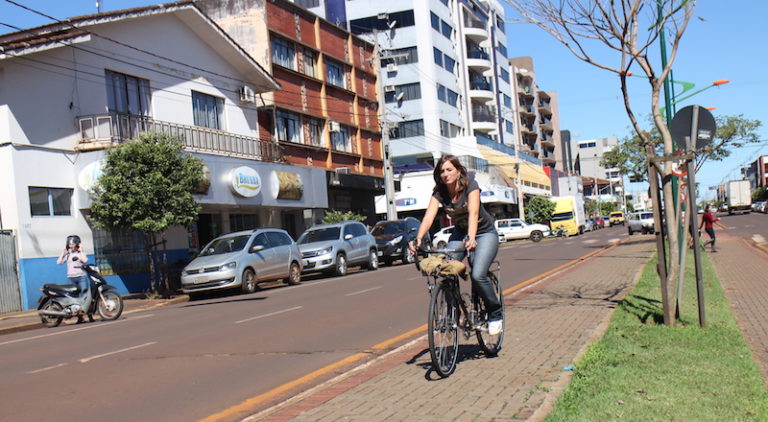
In cities, bicycles compress distance. When you can easily cycle, the city expands without becoming alienating. Moreover, cyclists can avoid traffic jams, take shortcuts and are less dependent on timetables. By bicycle, you don’t pass through places, you move within them. This is why the bicycle often works as a passport to people’s hearts and homes. Locals want to help you, get to know you, and sometimes host you.
3. Bicycles work at human speed and effort
The bicycle operates at a unique velocity: faster than walking, slower than alienation. It allows you to stop spontaneously and notice your surroundings. You hear conversations and remain socially awake. Locals often walk or cycle themselves, so when you ride, you move at their speed.
Unlike driving, cycling also preserves the visibility of effort. It keeps the body present in movement instead of substituting energy with a machine. When traveling, this effort is often recognized and rewarded. People know what cycling takes. They are impressed by it — and curious. Many want to hear your story.
4. Bicycles advance gender equality
In the late 19th century, suffragettes like Susan B. Anthony described the bicycle as a force for women’s emancipation. More than a century later, this remains true in many parts of the world. Mobile autonomy shifts social structures, and restrictions on women cycling are never really about bicycles — they’re about power structures.
In parts of Latin America, seeing women ride is still politically symbolic. When a woman can move independently, she can work, study and choose independently. And when people see a woman traveling by bicycle, they’re often empowered by the idea that they, too, could do the same. This raises curiosity.
Read here about HELINÄ RAUTAVAARA: MOTHER OF HITCHHIKING AND LONG-DISTANCE CYCLING.
5. Bicycles function when other vehicles don’t
When fuel is unavailable, infrastructure collapses or economies falter, bicycles continue to work. World Bicycle Relief was founded in response to the 2004 Indian Ocean tsunami, recognizing that mobility is essential to recovery. A bicycle requires no fuel supply chain, no insurance bureaucracy and usually no license. It can be repaired with basic tools and basic skills.
Although bicycles are fragile, they’re also locally resilient. When I think about the places my bicycle has taken me, I know I couldn’t have made it even on a 4×4. And I know I can fix my bicycle myself if anything happens.
6. Bicycles require minimal capital investment
In many parts of the world, a bicycle multiplies earning capacity. And this is true with minimal capital investment. A bicycle enables mobile vendors, delivery services, rural supply chains and informal economies. It is often the first step from subsistence to stability — and it scales without becoming extractive.
For travelers, bicycles are usually financially accessible. In Latin America, many people own bicycles but have never considered cycling beyond the next town. In that sense, bicycle travel is also a shift in mindset and bicycle travelers are ambassadors for a mindset shift.
7. Bicycles are an environmentally conscious choice
Cycling produces no direct emissions, minimal noise and occupies little space. In cities where bicycles dominate, less land is sacrificed to parking. Public space returns to people, and streets become livable rather than merely functional.
When traveling by bicycle, your carbon footprint remains minimal. You don’t physically or acoustically pollute your surroundings. Moreover, the production of traditional bicycles does not rely heavily on extractivism in the Global South.
Crossing borders by bicycle is simple. No environmental vignettes. No permits. You just pedal on — and arrive directly at people’s doors.
Easy steps to take now:
Get on your bicycle and get out there.
Enjoy the feeling of freedom, independence, and power. Take a moment to reflect on what the bicycle means to you. And if this resonated, share it — so more people can see the bicycle for what it truly is: a revolutionary social device.