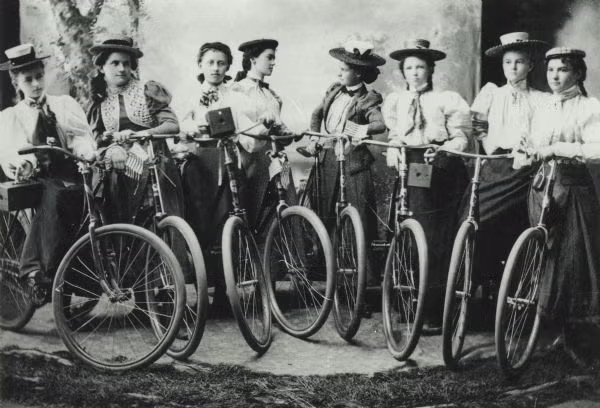
In 1896, American suffragette Susan B. Anthony declared that the bicycle has done more to emancipate women than anything else in the world. The statement may sound exaggerated, yet still to date, her words continue to resonate.
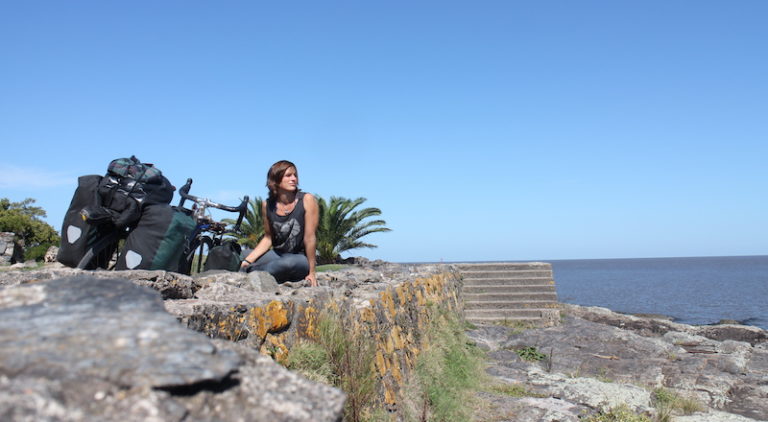
In countries like Finland, the bicycle is an ordinary object that children learn to ride after they learn to walk. I myself cycled to school every single day from spring until autumn, and it was the most normal thing for a girl to do. Also cycling across the Latin American continent was not far out for me. Yet, in many parts of the world, women on saddles is far from neutral. It’s political – and transformative.
Across continents and contexts, the bicycle continues to carry a deeper meaning for women. Here are 10 cases from around the world where cycling initiatives and bicycles empower women in their respective societies.
For more articles on women and bicycles, see e.g. FINNS ON BICYCLES: KAISA LEKA, 8 SOLO FEMALE CYCLISTS WHO ROCK or HELINÄ RAUTAVAARA: MOTHER OF HITCHHIKING AND LONG-DISTANCE CYCLING
1. Sierra Leone: Mobility as Infrastructure
In rural Sierra Leone, bicycles are lifelines that expand access to schools, healthcare and markets. Development initiatives, such as the Village Bicycle Project, provide bicycles to women and girls along with training in riding and basic maintenance. Girls who once walked hours to attend school can now cycle safely and reliably, increasing attendance and participation.
Bicycles also enable women in rural communities to travel to clinics, deliver goods to markets or take part in local community activities, giving them new economic and social opportunities. By giving women control over transportation, bicycles become more than tools. They’re part of an infrastructure that reduces isolation, enhances autonomy and strengthens women’s influence within households and communities.
2. Mexico: Safety, Violence and Urban Mobility
Across Latin America, the bicycle has become a way for women not only to claim mobility but also to reclaim public space that has historically felt unsafe or hostile. In Mexico City and other urban centers, cycling collectives and mass rides explicitly link cycling to campaigns against street harassment, violence and unsafe road conditions, all of which disproportionately deter women from moving freely.
In these contexts, safety concerns are not abstract. They shape who feels able to ride, where and when. Cycling events and feminist actions transform city streets into visible statements that women deserve not just mobility, but safe mobility – both from gender-based harassment and from traffic environments designed without their safety in mind, making cycling a tool for both transport and gendered urban justice.
3. Ireland: Sustainability, Climate Action and Bicycles
In parts of Europe, research is beginning to examine how sustainable transport policies intersect with gender, foregrounding both climate goals and mobility equity. In Ireland, government climate action frameworks explicitly consider cycling as part of decarbonising transport and meeting net-zero targets, and researchers are investigating how cycling infrastructure and policies can be designed to better meet women’s specific mobility needs while contributing to those climate goals.
Studies on gender-inclusive cycling in Irish contexts aim to surface the barriers that prevent women from cycling. This type of research illustrates that sustainable mobility and gender equality are mutually reinforcing: policies that reduce carbon emissions through cycling must also address gendered differences in safety, trip purposes and perceptions of risk if they are to be truly effective and equitable.
4. Indonesia: Economic Autonomy and Everyday Resilience
In Southeast Asia, the bicycle continues to be a vital tool for women’s economic autonomy in contexts where public transport is limited and private motor vehicles remain costly and of male dominance. In Indonesia, working-class women often use bicycles to commute to factories, travel to markets, deliver goods and run micro-enterprises.
Studies and pilot initiatives like the Women on Wheels programme in Surakarta highlight how bicycles offer a flexible, low-cost mode of transport that expands women’s access to income-earning opportunities, reduces dependency on costly alternatives and allows them to balance work with caregiving responsibilities. For many women in Indonesian cities, the bicycle is a vehicle for economic participation and resilience in everyday life.
5. Afghanistan: Cycling as Resistance
In Afghanistan, cycling for women is both a practical challenge and a political act. Under Taliban rule, women are largely barred from schools, sports and public spaces, making even a short ride on a bicycle political: bicycles represent mobility, agency and the courage to challenge restrictive social and political norms, even under life-threatening conditions.
In 2024, Afghan sisters Yulduz and Fariba Hashimi, competed in the 2024 Paris Olympic Games, riding under the pre-Taliban Afghan flag as a symbol of resistance and hope. The sisters learned to cycle in secret and eventually began competing in local and national races. When Taliban restrictions intensified, they fled the country to continue cycling internationally. Their example illustrates how bicycles can carry women beyond physical boundaries, into education, sport and global visibility.
6. Iran: Between Law and Defiance
Although no formal nationwide law explicitly bans women’s cycling in Iran, it remains controversial and socially contested. In some cities, authorities have treated women cycling in public as an “sinful” act, citing religious edicts and moral policing rather than written law. In 2019 the prosecutor of Isfahan declared women’s cycling haram (forbidden) and ordered police to even confiscate bikes from female riders.
As debates over women’s bodily autonomy and public presence persist, many Iranian women continue to ride bicycles – sometimes in parks or on women-only recreation paths – adapting to social expectations by observing dress codes and choosing spaces where rules are not strictly applied or monitored. Social media campaigns such as #IranianWomenLoveCycling showcase women riding bicycles, inspiring others to take up cycling by offering encouragement, support and a sense of community.
7. Finland: Integration and Everyday Equality
In Finland, cycling is part of everyday life. Yet for many immigrant women arriving from countries where cycling was inaccessible, socially restricted or simply not part of daily mobility, the skill is not automatic. Thus integration programs have taught newly arrived women to cycle as a doorway to social participation and independence.
When women learn to ride, they gain practical autonomy: the ability to reach workplaces, schools, childcare centers and community networks without reliance on complex public transport routes. Cycling cuts travel costs, supports schedules that revolve around work and caregiving and opens up social spaces that might otherwise feel distant or intimidating. Here, empowerment isn’t dramatic. It’s practical. In translates into routines that cumulatively shape economic and social inclusion.
8. Spain: Designing Cities with Gender in Mind
In Barcelona, feminist urban research is reshaping how planners understand cycling and sustainable mobility. A project known as The Cycling Gender Gap documented differences in how men and women use bike lanes and cycling infrastructure, finding that women in Barcelona are significantly underrepresented among cyclists.
The research goes beyond participation statistics to explore why that gap exists: women’s trip patterns are more varied, safety perceptions differ dramatically, and route design and lighting influence comfort levels in different ways for women and non-binary riders. Therefore, feminist urbanists argue that a truly sustainable transport system must accommodate diverse trip purposes, integrate safe cycling infrastructure into everyday routes and account for intersectional identities.
9. India: Distance as Defiance
In India, long-distance leisure and adventure cycling among women remains a counter-narrative to prevailing norms around women’s movement. Throughout the country, women undertaking extended bicycle journeys challenge expectations that women’s travel should always be supervised, purposeful or bound by familial roles.
Although nationwide data on women’s long-distance cycling participation is limited, broader mobility research shows that gender gap in out-of-home movement in India is stark: women’s trip rates are consistently lower than men’s, with a large share of women not reporting travel outside the home. Against this backdrop, examples of women bicycling across thousands of kilometers extend what is socially imaginable. They reshape assumptions about endurance, agency and female presence in public space.
10. Australia: Intersectionality on Two Wheels
Cycling in Australia is still predominantly associated with white, middle-class women, reflecting historical patterns of access, leisure culture and urban planning. Trails, recreational routes and even competitive cycling spaces have long catered to those with economic means, free time and cultural familiarity with outdoor recreation. For women from indigenous communities and other marginalized groups, these spaces have often been difficult to access safely or feel socially welcoming.
Recognizing this disparity, several initiatives now explicitly target intersectional inclusion and provide guided rides, community support and skills training, intentionally creating safe, culturally sensitive spaces for women and non-binary people who might otherwise feel excluded. These programs not only increase participation but challenge historical inequities.
To conclude
Although women’s cycling has grown globally, especially in the Global South it often remains constrained by law, custom, safety concerns or economic inequality. In many countries, women on bicycles face direct repression. In others, social norms restrict movement. Yet, mobility is power and the bicycle remains the most accessible vehicle for women and girls around the globe. Conclusion? Bicycle is power.
Easy steps to take now:
If you enjoyed this article, share it so more women can read it and feel empowered! And if you haven’t already, follow for more stories on transcultural bicycle travel, intercultural encounters and multicultural parenting.